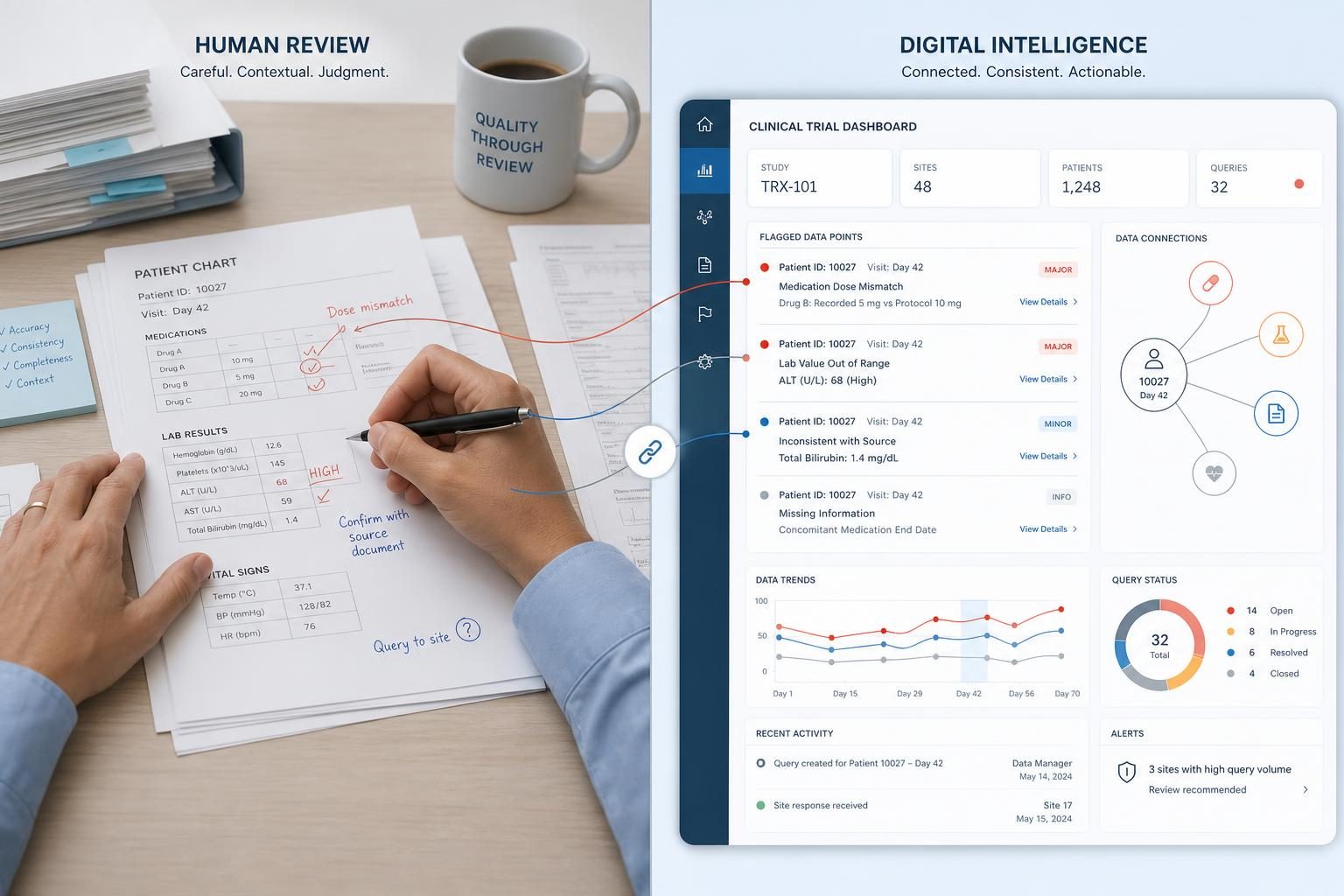
Automated Source Review vs. Manual Clinical Trial Quality Checks
Clinical operations teams face a stubborn tradeoff: they need enough source review coverage to detect meaningful discrepancies, yet manual review can produce uneven coverage and repetitive work. A reviewer may spend hours comparing dates, laboratory values, medication records, and visit notes while still missing a pattern spread across several sites. A well-designed clinical trial source data review process combines automated checks for repeatable signals with qualified human judgment for records that require context.
Quick answer: Use automation to scan accessible, structured source information for defined discrepancies, then route exceptions to trained clinical and quality staff. Keep manual review for narrative documentation, safety decisions, eligibility questions, protocol deviations, specialized assessments, and any finding that requires interpretation. The right comparison is task allocation, not technology versus people.